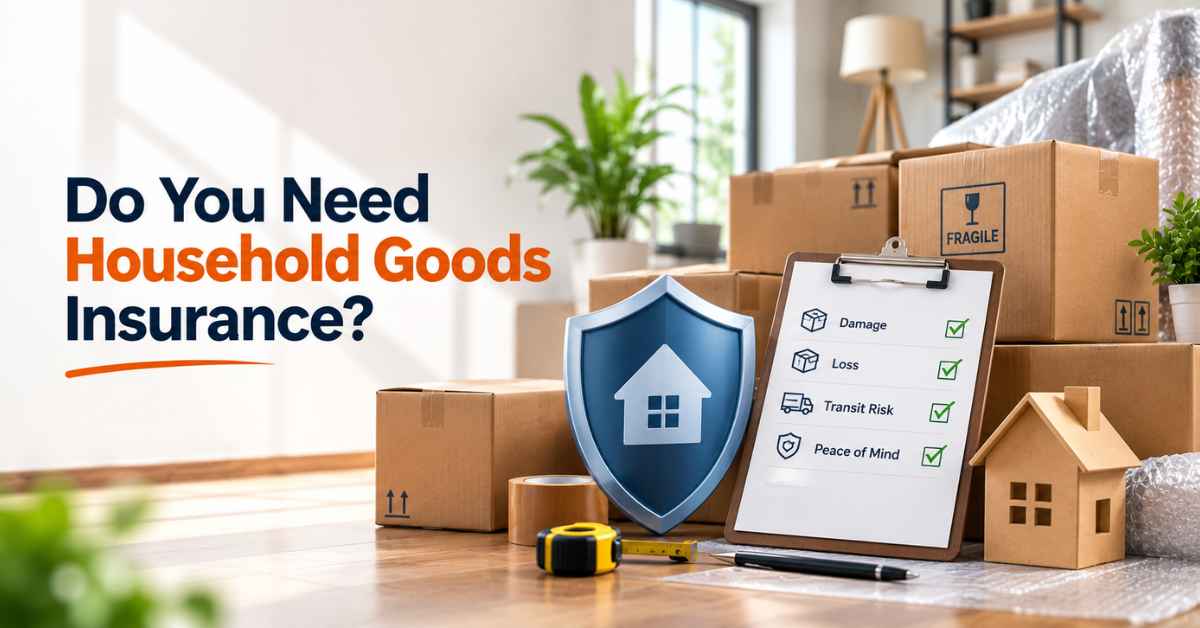
What Is Household Goods Insurance?
Household goods insurance is a type of protection for your belongings during a move. If your items are lost or damaged during transit, the insurance helps cover the cost of repair or replacement. Think of it as a safety net for your move.
What Does Moving Insurance Usually Cover?
Not all insurance policies cover the same things. But most basic moving insurance includes:
- Accidental Damage: If a box is dropped or an item is damaged while being loaded or unloaded, the insurance may cover the cost of repair.
- Fire and Flooding: Some policies cover damage caused by fire or water during transit.
- Theft: If items are stolen during the move, some policies provide compensation.
What is usually not covered includes fragile items that were not professionally packed, and items that break due to normal settling or vibration during transport.
Types of Moving Insurance
There are generally two types of moving insurance:
- Basic Carrier Liability: This is the most affordable option and is often included in your moving quote at no extra cost. However, it offers limited coverage. It may pay only a small fixed amount per kilogram of damaged goods, which is often much less than the actual value of the item.
- Full Value Protection: This is a more complete option. If an item is damaged or lost, the mover must repair it, replace it, or pay you the current market value. This option costs more but gives you much better peace of mind.
When Is Moving Insurance Worth It?
Ask yourself these questions before deciding:
- Do you own expensive items? If you have high-value electronics, jewellery, antiques, or artwork, insurance is strongly recommended.
- Are you moving long distance? Longer moves mean more time in transit and a higher chance of something going wrong. Insurance makes more sense for interstate moves.
- Are you moving fragile items? Glass furniture, large mirrors, and delicate decor carry a higher risk of damage. Insurance helps protect these items.
- Is the mover already insured? Some verified movers already carry commercial insurance that covers your goods. Ask for proof before paying extra for additional coverage.
How Do Claims Work?
Filing a claim after a move is straightforward when you are prepared. Here is what to do:
- Document Everything Before the Move: Take photos of your valuable items before packing. This gives you proof of their condition before the move.
- Inspect Your Goods on Delivery: When your belongings arrive, inspect them before the movers leave. Note any damage on the delivery receipt.
- File the Claim Quickly: Most insurance policies have a time limit for filing claims. Do not wait too long after discovering damage.
- Keep All Documents: Save your moving contract, insurance policy, photos, and delivery receipt. These documents will be needed when you file the claim.
Is It Worth the Extra Cost?
For most people, moving insurance is worth the investment. The cost of insurance is usually a small percentage of your total move cost. Compare that to the cost of replacing a damaged television or a broken wardrobe, and the insurance quickly pays for itself.
National Shifting connects you with verified movers who are transparent about their insurance options. Always ask about coverage before you book, and make sure you understand exactly what is and is not included in the policy. A little extra cost today can save you a lot of money and stress tomorrow.